EMDR Therapy: Healing Emotional Wounds at the Root
A Brief History of EMDR
EMDR (Eye Movement Desensitization and Reprocessing) was developed in the late 1980s by psychologist Dr. Francine Shapiro. She discovered that when the brain is gently stimulated from side to side—through eye movements, tapping, or sounds—distressing memories begin to lose their emotional charge.
What started as an observation quickly became one of the most researched and effective trauma therapies in the world. Today, EMDR is recognized as an evidence-based treatment for trauma, anxiety, attachment wounds, negative self-beliefs, and emotional triggers that feel bigger than the present moment.
EMDR doesn’t erase memories—it helps your nervous system finally digest what was never fully processed.
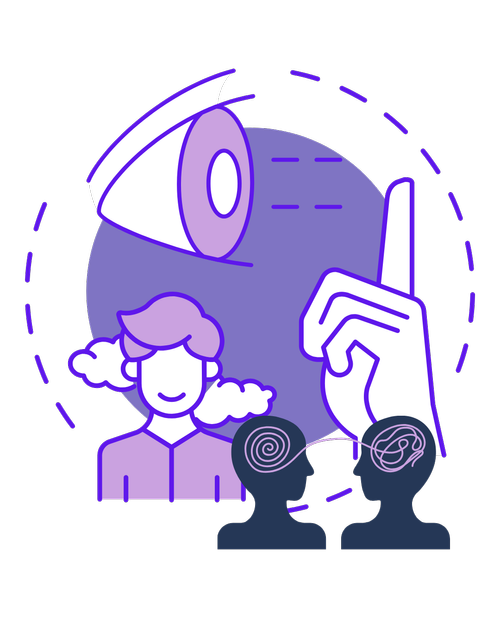

What EMDR Is Like (The Experience)
EMDR is not traditional “talk therapy.” You don’t have to explain everything perfectly, relive every detail, or analyze your past endlessly.
Instead, we gently:
Identify a memory, belief, emotion, or body sensation
Activate it just enough to bring it into awareness
Use bilateral stimulation (eye movements, tapping, or sounds)
Allow your brain to do what it naturally knows how to do: heal
You may notice:
Emotions shifting
Body sensations releasing
New insights or perspectives emerging
A sense of distance from the memory
Relief, calm, or clarity afterward
Many clients are surprised by how organic the process feels—your brain leads, I guide and support.
What EMDR Does in the Brain
When something overwhelming happens—especially in childhood or during emotionally unsafe relationships—the brain can’t fully process it.
Instead of becoming a “past memory,” the experience gets stored as:
A negative belief (“I’m not good enough”)
A body response (tight chest, heaviness, numbness)
An emotional trigger (anxiety, shame, panic, overthinking)
These memories live in the brain’s emotional and survival centers, not the logical part of the brain. That’s why insight alone doesn’t always change how you feel.
EMDR helps the brain:
Reprocess stuck memories
Integrate them into adaptive memory networks
Reduce emotional intensity
Update outdated beliefs
Restore nervous system regulation
In simple terms:
Your brain finally realizes, “That was then. This is now.”

Sample EMDR History-Taking Outline
Target Belief: “I’m Not Good Enough”
Below is an example of how we might explore and organize memories connected to a core belief—without forcing anything or overwhelming you.
Core Negative Belief: “I’m not good enough”
Present-Day Triggers
Overthinking relationships
Feeling pressure to perform or succeed
Anxiety when resting or slowing down
Fear of disappointing others
Feeling chosen for what you give, not who you are
Memory Map (Example)
Memory 1: Early Childhood – Emotional Aloneness
Age: ~5–6
Memory: Playing alone, feeling slightly unseen or emotionally on your own
Belief Formed: “I have to be okay by myself” / “My needs don’t matter”
Body Sensation: Emptiness or quiet heaviness
Memory 2: Family Stress / Financial Loss
Age: ~12–14
Memory: Parents losing financial security, sensing responsibility to “hold it together”
Belief Formed: “I’m not okay”
Emotion: Anxiety, pressure
Body Sensation: Tight chest or stomach
Memory 3: Achievement & Self-Worth
Age: Late teens / early 20s
Memory: Pushing yourself academically or professionally but never feeling satisfied
Belief Formed: “No matter what I do, it’s never enough”
Emotion: Exhaustion, self-criticism
Memory 4: Romantic Relationship
Age: Adulthood
Memory: Being chosen inconsistently or having to prove your value
Belief Formed: “If I were enough, he’d choose me”
Emotion: Sadness, longing
Body Sensation: Heaviness in chest
Memory 5: Present-Day Trigger
Age: Now
Memory: Overthinking a text, silence, or perceived rejection
Belief Activated: “I’m not good enough”
Response: Anxiety, rumination, emotional shutdown
Reprocessing Goal
Through EMDR, the goal is not to convince you intellectually—but to help your nervous system experience something new.
Possible adaptive beliefs that emerge naturally:
“I am enough as I am”
“I don’t have to earn love”
“I’m allowed to rest and receive”
“I can be chosen without proving”
How This Fits With My Approach
As a therapist, coach, and woman who has lived this work—not just studied it—I understand how deeply these patterns can run.
You don’t need fixing. You need safety, integration, and permission to stop carrying what was never yours.
EMDR helps you heal from the inside-out—so your life, relationships, and sense of self begin to feel lighter, calmer, and more aligned.

Frequently Asked Questions
-
Yes, I have seen clients have an improvement in clinical symptoms as a result of EMDR therapy. For complex cases, EMDR will be combined with other trauma therapies.
-
Yes, EMDR can be done in person and virtually. I have conducted 99% of my EMDR sessions virtually and successfully. Right now I only offer virtual EMDR therapy sessions.
-
EMDR works but in some cases it may not be a fit for a client. I have other therapies and interventions in my toolbox should this be the case. Should I believe a therapy that I am not trained in be more beneficial, then I will assist with referring out.
-
Right now I am only offering weekly 55 minute appointments. Should intensives open up my 1:1 clients will hear first about it and I will advertise them on my website.
-
Some clients are scared to start and that is okay. This is not a process we must rush into. We can start with less distressing or traumatic memories or we can gently introduce EMDR sessions in 20-30 minute increments vs a fully 60 minute session. I am here to support you in the most safest pace for you in treatment.
-
EMDR is a wonderful adjunct therapy. Many of my clients have their own 1:1 therapist for talk sessions and then meet me for EMDR seperately.
-
No. If you are in a good place, you can just meet me for weekly EMDR. If you are suffering from symptoms that are impacting your functioning and you feel as though you need to process and talk through things weekly you may benefit from meeting with a therapist one day a week for that and doing EMDR another day of the week. In some cases, I may suggest Brainspotting for this type of circumstance as it is more fluid. Should I have openings and our schedules align, I do occasionally see clients 2x a week (1x for talk therapy, 1x for EMDR).
-
EMDR is not meant to have you “relive” your trauma. The idea is to have one foot in the trauma or the distressing emotional memory and one foot in the present. Phase 2 of EMDR makes sure you have skills or resources in place to ‘handle’ tough memories or emotions.
-
It depends. Complex trauma cases may take several years depending on where you are at. If you are functioning well, it may take a few months to work through past memories. I’ve worked with clients as little as 6 months to 4 years with others. This will be discussed during treatment.
-
No, parts of EMDR are somatic which means it focuses on the body. Your body can remember things that your mind doesn’t.
Schedule Consult Call:
Here’s how to become a client:
Fill out the following form so we can meet for a 15-30 minute free consultation call.
Please have prepared the following for our call:
If you plan on using insurance, all required information.
The reason you are seeking out services (symptoms, patterns, what you would like to work on or improve of)
What you have tried before to help you
Your schedule to see if it matches mine
If I have decided that I can help and we both think this is a good match, your first session will be scheduled and you will fill out intake paperwork and consent forms to be completed.
Please note that psychotherapy is a weekly commitment. At this time, I am only taking clients who can meet every week.
If the form to the right doesn’t appear, email me at: therapy@cynthiamachlcsw.com